APPLICATOR Australian Waterproofing Pty Ltd
SECTOR Water Treatment
PRODUCTS
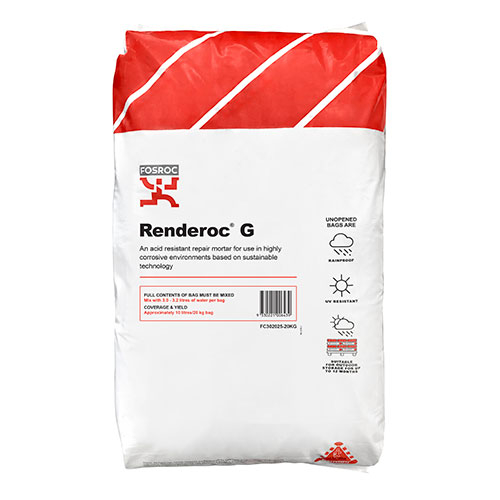
- Renderoc® G
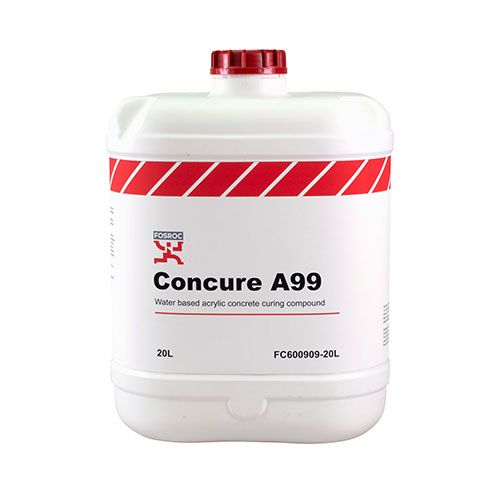
- Concure® A99
Restoring concrete structures exposed to chemical environments requires more than a standard repair mortar - it demands products that are fit for purpose and close collaboration throughout specification and application. That approach underpinned the successful rehabilitation of an effluent holding tank at a major water treatment facility, where Australian Waterproofing Pty Ltd repaired approximately 550 square metres of the tank's internal perimeter walls and floor using Renderoc® G and Concure® A99.
Developing a specification fit for purpose
Working alongside the asset owner's consulting engineer and Australian Waterproofing Pty Ltd, the Fosroc ANZ technical team assessed the operating conditions within the effluent holding tank before developing a repair specification capable of withstanding ongoing chemical exposure.
Fosroc ANZ Business Development Manager, George Fragias, said understanding the service environment was the starting point.
"The engineer worked with Fosroc ANZ Product Segment Specialist, Hamid Khan, and Fosroc ANZ VIC, TAS & SA State Manager, Alex Geralis, to develop a system that was fit for purpose," George said. "They reviewed the chemical profile and the functionality of the tank before putting together a specification aligned to those conditions."
Australian Waterproofing Pty Ltd Director Gary Moody said an alternative repair system had initially been proposed by the client. However, after confirming the chemicals that the structure would be exposed to, it became clear a different solution was required.
"When we verified the chemicals that were actually in the tank, the polyurea and cement-based system they wanted to use wasn't adequate," Gary said. "We went back to Fosroc and asked for a solution and specification."
The final specification centred around Renderoc G, a chemical-resistant geopolymer repair mortar specifically developed for the repair and relining of concrete structures exposed to corrosive service conditions. Common applications include sewer assets, acid bunds and food processing facilities where long-term repair performance is essential. The product also complies with AS 4020:2018 for use in contact with drinking water, demonstrating its suitability across a broad range of water infrastructure applications.
Preparation creates long-term repair performance
Surface preparation proved to be one of the most critical stages of the project. Years of chemical exposure had significantly deteriorated the concrete substrate, and once preparation began the team discovered the concrete was in far poorer condition than originally anticipated.
"We exceeded the required concrete surface profile by an absolute mile," George explained. "We were targeting around a CSP 7 or 8, but because the concrete had worn away much more than expected, we ended up with a much coarser profile."
Although this increased the quantity of repair mortar required, George said the deeper profile ultimately improved the repair.
"In some of the localised areas, deterioration extended a further 10 to 15 millimetres beyond the nominal 30 millimetre repair depth, resulting in additional material consumption. We ended up using another 250 bags of product before we even got back to a flat surface," he explains. "When you've got a really undulated surface, the cementitious repair mortar physically locks into the concrete. If you've got something really smooth, you're relying much more on chemical bond."
Why Renderoc G?
With chemical resistance a critical requirement for the application, Renderoc G was identified as the only suitable repair solution capable of meeting the performance requirements.
Applied using the wet spray process, Renderoc G is a protection and relining material that provides:
- Excellent adhesion to the prepared concrete
- Superior compaction
- Rapid placement
- The ability to achieve high-build applications without sagging.
These characteristics make it particularly well suited to restoring large areas of concrete within a confined tank environment.
George said maintaining the specified 30mm repair thickness across the entire structure required careful planning.
"The team worked in a checkerboard sequence using sacrificial guides. Once they knew they had achieved the required thickness in each section, they could come back and fill the remaining areas while maintaining a consistent build."
Feeding almost 1,800 bags of material into the tank also required the installation process to be continually refined.
"We adjusted the water content within the allowable parameters as we were applying the coating, to improve consistency and application ease," said George.
Concure A99 delivers effective curing and long-term repair performance
Once each section of Renderoc G had been applied, Concure A99 was sprayed onto the surface as a curing membrane. George said curing plays a vital role in the long-term performance of cementitious repairs.
"Concure A99 helps retain moisture within the repair mortar while it cures. It reduces shrinkage, prevents rapid drying in hot conditions and helps maximise adhesion back to the original concrete substrate, which is why we recommend it on many concrete remediation projects."
The staged application also meant curing could begin progressively as work advanced, helping ensure each section achieved optimum performance.
Technical support beyond product supply
For Gary and his team of qualified waterproofing technicians, the project's success came down to more than selecting the right products.
"The support from Fosroc ANZ's R&D department, the engineers and the field team gave both us and the client confidence throughout the project."
Close collaboration unlocks new possibilities
Although the project involved a relatively small footprint within the overall water treatment facility, it demanded significant technical expertise, careful planning and close collaboration between the owner, consulting engineer, waterproofing specialist and manufacturer.
The completed rehabilitation has delivered a long-term repair capable of protecting the tank under ongoing chemical exposure while supporting the ongoing performance of the facility's water treatment operations.
This project demonstrates how understanding the operating environment, developing a fit-for-purpose specification and providing technical support throughout delivery can achieve better outcomes for critical infrastructure.