Client Mid West Ports Authority
Consultant GHD
Contractor Marine & Civil Maintenance (MCM)
Products
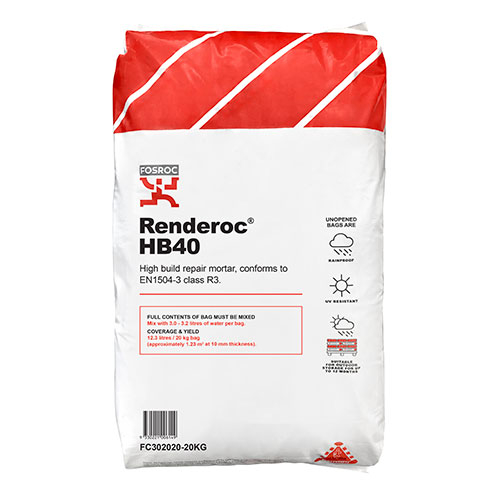
- Renderoc® HB40
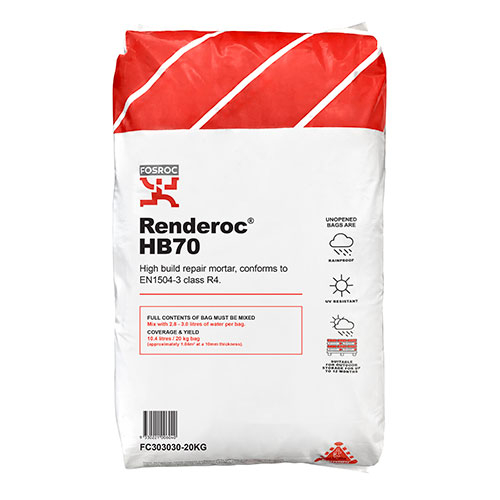
- Renderoc® HB70
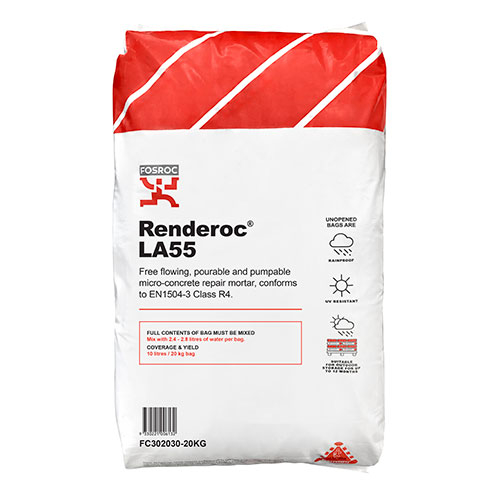
- Renderoc® LA55
- Guncrete™ E
- Nitofill™ LV
- Vector Galvashield® Fusion® T2
Constructed in the early 1960s, Berths 3 and 4 are a vital part of Geraldton Port’s bulk export infrastructure. By 2018, decades of exposure to the harsh marine environment had resulted in significant deterioration, including chloride-induced corrosion of reinforcing steel, cracking concrete and hidden corrosion activity beneath the surface.
With the need for a durable, long-term remediation solution becoming increasingly urgent, Mid West Ports Authority engaged engineering consultant GHD and specialist contractor Marine & Civil Maintenance (MCM) to manage the project, with Fosroc ANZ brought on board to help develop an innovative repair and corrosion protection strategy.
Addressing marine infrastructure deterioration
As one of the region’s key export facilities, the berths are subjected to constant saltwater exposure, heavy loading conditions and continual operational activity. Investigations identified several critical durability issues, including chloride-induced corrosion of reinforcing steel at the deck soffit, near-surface delamination extending beyond what traditional sounding could detect, and active corrosion occurring without extensive visible cracking.
A whole-of-life assessment over a 30-year horizon identified the need for a remediation strategy that would not only repair visible defects, but also provide long-term corrosion protection in aggressive tidal and splash-zone conditions.
Throughout the project, Fosroc ANZ Key Account Manager, Dennis Murray, worked closely with Fosroc ANZ Repairs & Grouts Product Segment Specialist, Hamid Khan, and Andrew Dickinson, Vector Corrosion Technologies’ Business Development Manager for the Oceania region, to support the development and implementation of an integrated remediation strategy.
Project challenges
According to Dennis, the project presented significant structural and logistical challenges from the outset.
“It’s a working port, so we had to work around shipping movements. Scaffolding had to be set up underneath, and with the tides, the workers were almost walking on the water with the waves lapping at their safety boots,” Dennis explains. “It’s also a remote location, so deliveries to site needed to be carefully planned.”
A multi-faceted solution
This project required more than conventional repair. The Fosroc–Vector solution addressed both the visible damage as well as the hidden corrosion risk. The overall goal was to combine structural repair with long-term corrosion control.
Concrete was removed using hydro demolition techniques to expose the reinforcing steel. Severely corroded reinforcement was replaced, while salvageable steel was cleaned back to bright steel using grinders and wire brushing.
“The berths had various degrees of corroded steel on the soffit and beams underneath the port, so there was a huge amount of concrete breakout required,” Dennis explains.
In addition to extensive concrete repairs, large sections of the structure also required crack remediation to restore durability and prevent further moisture and chloride ingress.
“Guncrete™ E was widely used because it could be sprayed over very large areas. We also supplied Nitofill™ LV, which is an epoxy crack injection system, along with standard concrete repair products including Renderoc® HB40, Renderoc® HB70 and Renderoc® LA55.”
More than 50,000 litres of repair mortars were used, each selected for their high durability, excellent adhesion characteristics and ability to withstand chloride exposure in coastal infrastructure applications. The system enabled rapid reinstatement of damaged concrete while protecting surrounding areas and ensuring compatibility with the corrosion protection strategy.
Vector’s Galvashield® Fusion® T2 hybrid cathodic protection system was selected and installed, creating a fully engineered repair-and-protect solution rather than isolated patch repairs.
Leveraging new anode technology
More than 6,000 Galvashield Fusion T2 anodes were installed across the two berths. As Hamid Khan explains, this innovative new hybrid system emerged as a result of recent technological advances in cathodic protection.
"This system operates in two stages," he says. "An initial short-term phase where an integrated power source delivers impressed current to rapidly polarise reinforcement, followed by a long-term galvanic phase that continues protection without the need for a permanent power supply or rectifier maintenance.”
Andrew Dickinson said the Geraldton Wharf project was an ideal opportunity to demonstrate the practical advantages of Vector's Galvashield Fusion system.
“Galvashield Fusion represents a major step-change in corrosion protection technology because it combines impressed current and galvanic cathodic protection into a single self-contained unit,” Andrew explains.
“What makes the technology different is the ability to self-power the impressed current phase without external wiring, conduit or power supplies. That simplified installation significantly, while still delivering the benefits of a two-stage corrosion protection system.”
The technology integrates more than 30 years of impressed current cathodic protection (ICCP) experience with over 25 years of galvanic corrosion protection technology into one scalable solution.
Andrew said the simplified installation process delivered major benefits for the Geraldton Wharf remediation. Installation was completed in almost half the time typically associated with conventional impressed current cathodic protection systems.
“Each anode activates immediately once connected to the reinforcing steel, so there’s no complicated commissioning process,” he says. “By removing the need for external power infrastructure, we were able to reduce installation time, minimise disruption and ensure more consistent current distribution throughout the structure.”
Collaborative delivery the key to success
This was a genuinely collaborative project involving early engagement between Fosroc ANZ, Vector, consultant GHD and contractor Marine & Civil Maintenance (MCM).
The partnership included joint Fosroc–Vector input during repair and corrosion protection design, on-site technical guidance during concrete breakout, repair reinstatement and anode installation, as well as support with sequencing to integrate repairs and cathodic protection efficiently.
Fosroc ANZ also provided ongoing performance monitoring support and assistance with data interpretation following installation. The system was supported by performance monitoring aligned to BS EN ISO 12696 requirements.
This partnership approach ensured the solution was technically robust, buildable and aligned with the long-term asset objectives. Feedback from GHD and Marine & Civil Maintenance confirmed that the system addressed corrosion risk beyond traditional patch repairs, while the collaborative approach reduced project risk and decision uncertainty.
Long-term performance and industry recognition
Despite the challenging marine environment and operational constraints, the remediation was completed successfully, restoring and protecting two critical wharf structures at Geraldton Port.
The integrated Fosroc-Vector solution achieved active corrosion control across the entire deck soffit, with independent monitoring confirming that the system continues to perform more than seven years after commissioning, with measured current densities exceeding cathodic prevention criteria.
The project successfully extended the service life of the wharf structures without the need for major reconstruction or prolonged operational shutdowns, providing a practical and cost-effective alternative to asset replacement.
The success of the project was recognised at the 2025 Australasian Concrete Repair Association (ACRA) Awards, where it received both the Research, Design and Innovation Award and the Strengthening / Protective Coating / Cathodic Protection Award.
“It was a massive team effort and a great success,” Dennis reflects. “The Mid West Ports Authority were extremely impressed with the products, the technology, and the co-ordinated effort between Fosroc, Vector, MCM and GHD.”